Audio Player
The symphonic poem emerged in the mid-19th century as one of the most innovative orchestral forms of the Romantic era—a single-movement work that fused music and extramusical ideas such as literature, art, or philosophy. Its origins lie primarily with Franz Liszt, whose series of thirteen symphonic poems (composed between 1848 and 1858) defined the genre. Inspired by the writings of Goethe, Byron, and Victor Hugo, Liszt sought to free symphonic writing from traditional multi-movement structures, creating music that unfolded as a continuous narrative. Works such as Les Préludes and Tasso embodied his ideal of “programmatic unity,” in which thematic transformation replaced classical sonata form, allowing motives to evolve alongside the story’s emotional trajectory. According to Liszt, the form of the work depends on the programatic story. Revolutionary ideas!
I offer below an excerpt from Liszt’s symphonic poem Mazeppa, completed in 1854, with a portion of the Victor Hugo text included, as well as paintings, drawings, and other visual representations of the story, which involves a Ukrainian nobleman who became a page at the court of John Casimir, King of Poland. Due to a love affair with the wife of a Podolian count, Mazeppa was punished and tied naked onto a wild horse that was violently heading toward Ukraine. The horse collapsed in death and Mazeppa was saved by Ukrainian Cossacks who then named him as their leader.
COMMENTARY
The Development of the Symphonic Poem
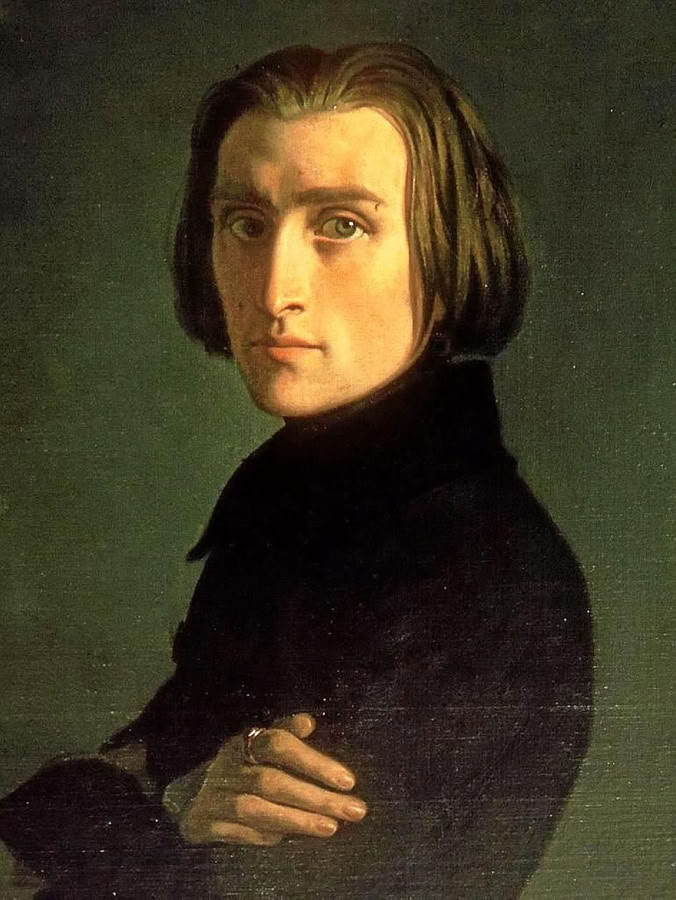
Franz Liszt (1811-1886)
Audio Player
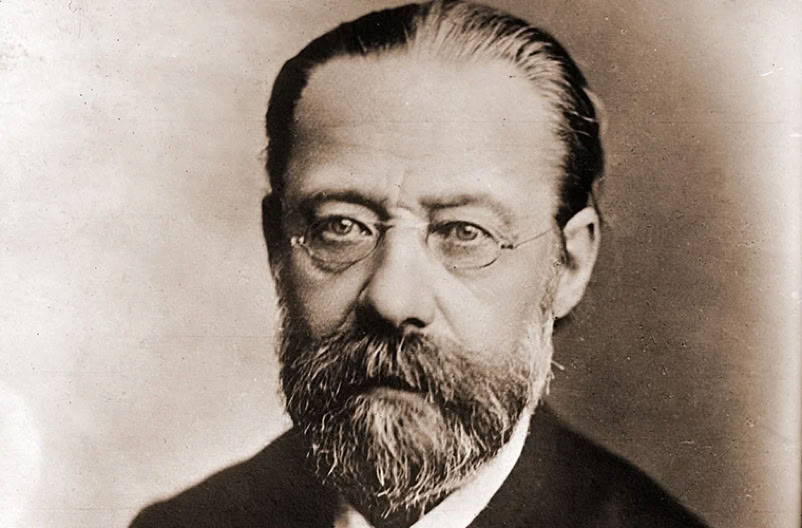
Liszt’s innovation spread rapidly across Europe, influencing composers in both the Germanic and non-Germanic traditions. Bedřich Smetana’s Má vlast (My Country) (1874–79), a cycle of six symphonic poems, translated Liszt’s model into a distinctly national voice, evoking the landscape, legends, and history of Bohemia. One of Smetana’s most popular and beloved works is The Moldau, which runs through the Bohemian forests and the city of Prague.

The Moldau River and the city of Prague
Bedrich Smetana (1824-1884)
Enter Text
A wonderful performance of The Moldau (1874) with the Gimnazija Kranj Symphony Orchestra conducted by Nejc Bečan
Audio Player
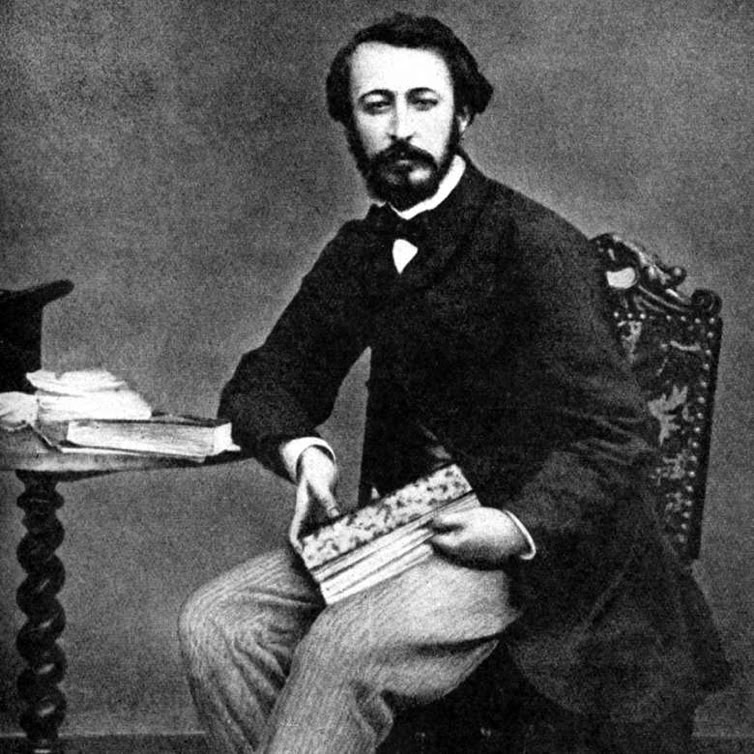
Camille Saint-Saëns (1835-1921)
Enter Text
In France, Camille Saint-Saëns contributed elegant, formally balanced examples such as Danse macabre (1874) and Phaéton (1873), demonstrating that the symphonic poem could thrive outside of German philosophical gravitas. César Franck’s Le chasseur maudit (1882) and Psyché (1888) deepened its harmonic and emotional complexity, while in Russia, Franz Liszt’s legacy took root through Mily Balakirev and his circle—particularly Alexander Borodin’s In the Steppes of Central Asia (1880) and Nikolai Rimsky-Korsakov’s Scheherazade (1888), both merging narrative color with nationalistic idioms.
Below: Camille Saint-Saëns’s Danse macabre vividly depicts Death summoning skeletons from their graves to dance at midnight. A solo violin represents Death’s fiddle, accompanied by rattling bones and eerie xylophone clatter. Playful yet sinister, this dazzling tone poem transforms the medieval “dance of death” legend into a brilliant display of orchestral color and wit. It has been animated visually many times.
Camille Saint-Saëns: Danse macabre (1874)
Alexander Borodin’s In the Steppes of Central Asia (1880) was written to honor Tsar Alexander II’s silver jubilee. This short symphonic poem paints a vivid musical picture of the vast Russian steppe. Over a gently undulating “traveling” accompaniment, Borodin introduces two themes: one representing Russian soldiers, the other an Eastern caravan. As these melodies intertwine, they symbolize peaceful coexistence between cultures within the empire. The work’s transparent orchestration—featuring muted strings, distant horn calls, and a haunting clarinet melody—captures both the immensity and tranquility of the landscape, culminating in a serene fading of sound as the caravan disappears into the horizon. The video offered here is one of my favorites.
Borodin: In the Steppes of Central Asia (1880)

Alexander Borodin (1833-1887)
One of the most beloved and famous of all symphonic poems is The Sorcerer’s Apprentice, by the French composer Paul Dukas (1865-1935). It is a dazzling symphonic scherzo inspired by Goethe’s 1797 poem of the same name. The tale follows an eager apprentice who animates a broom to carry water, only to lose control of his magic and cause chaos before the master returns. Dukas’s brilliant orchestration vividly portrays the story—playful clarinets depict the enchanted broom, surging strings and brass capture the mounting flood, and rhythmic energy drives the mischief to its frantic climax. CYS is proud to have programmed this work for our Season Opener for the 2025-26 season!
Dukas: The Sorcerer’s Apprentice (1897), with the Gewandhausorchester of Leipzig, Kurt Masur conducting
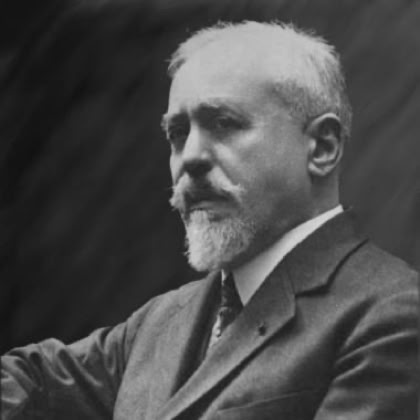
Paul Dukas (1865-1935)
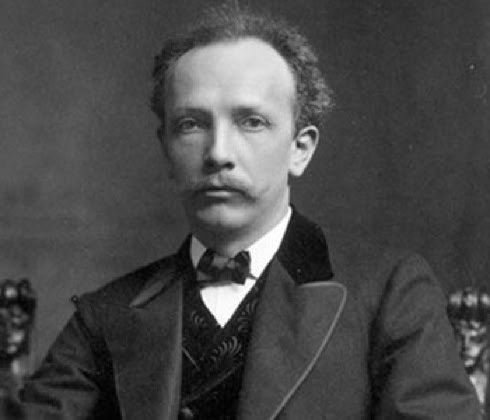
Richard Strauss (1864-1949)
By the time we get into the 1890s, Richard Strauss had become the undisputed master of the symphonic poem, with seven major works under his belt. He called these works Tondichtungen (tone poems) — Macbeth, Don Juan, Death and Transfiguration, Till Eulenspiegel, Also Sprach Zarathustra, Don Quixote, and Ein Heldenleben, all composed in the short ten-year period 1888-1898. With his unmatched mastery of orchestration, his daring and voluptuous harmonies, and his uncanny ability to portray virtually anything in musical terms (he famously once wrote “I want to be able to depict in music a glass of beer so accurately that every listener can tell whether its a Lager or a Pilsner.”), he conquered the music world and gained immediate notoriety and immortal fame. Here is an annotated guide to Till Eulenspiegel, with my own additions in red, as well as added photos and artwork. Enjoy! Strauss was at the height of his powers of musical depiction in this work.
Richard Strauss: An Annotated Guide to Till Eulenspiegel (1895)
At almost the same time as Strauss was working on Till Eulenspiegel, Claude Debussy (1862-1918), composed his Prelude to the Afternoon of a Faun (first performed in 1894). But is this a symphonic poem?
Why it fits:
Form and inspiration: Like a symphonic poem, it’s a single-movement orchestral work inspired by a literary source — in this case, Stéphane Mallarmé’s Symbolist poem L’après-midi d’un faune.
Narrative and atmosphere: Rather than following a strict sonata or overture structure, the piece evokes the mood, sensual imagery, and atmosphere of the poem — a hallmark of the symphonic poem tradition established by Liszt and developed by composers such as Richard Strauss.
Orchestral color and thematic transformation: Debussy uses continuous thematic development and rich orchestration to depict the faun’s dreamlike reverie, aligning it with the tone-painting aims of programmatic symphonic poems.
Why it’s sometimes viewed differently:
Debussy’s approach was revolutionary: Instead of telling a story or describing concrete events (as in Liszt or Strauss), Debussy’s focus was on suggestion and impression — creating a sound world that mirrors Mallarmé’s imagery rather than narrating it.
Debussy himself avoided the term: He did not label it a “symphonic poem,” preferring simply Prélude, emphasizing its function as a musical “prelude” to the poem’s atmosphere rather than a literal translation of it.
In short:
While Prélude à l’après-midi d’un faune shares the form, orchestral medium, and programmatic inspiration of a symphonic poem, it also transcends that category, marking the transition from Romantic tone painting to Impressionism — more a “poem of sound” than a narrative symphonic poem. Have a listen: what do you think?
Debussy’s Prelude to the Afternoon of a Faun (1893-94), performed the Ballets Russes
Debussy’s Prelude to the Afternoon of a Faun (1893-94), performed the Ballets Russes
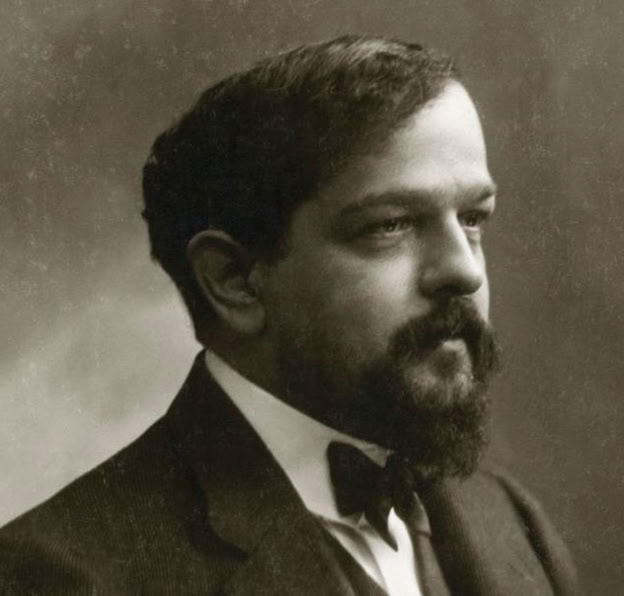
Claude Debussy (1862-1918)
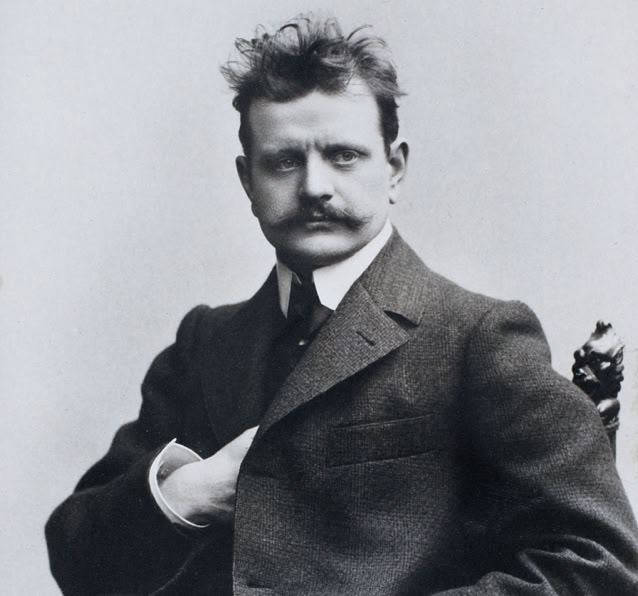
Jean Sibelius (1865-1957)
The symphonic poem was alive and well into the 20th century. The last major work by Finnish composer Jean Sibelius (1865-1957) was Tapiola (“The Realm of Tapio”), composed in 1926. For this symphonic poem, the composer wrote the following description:
Wide-spread they stand, the Northland's dusky forests,
Ancient, mysterious, brooding savage dreams;
Within them dwells the Forest's mighty God (Tapio),
And wood-sprites in the gloom weave magic secrets.
In this final and most enigmatic Sibelius symphonic poem, inspired by the Finnish forest spirit Tapio, the music evokes vast, brooding landscapes through shifting textures, haunting string tremolos, and stark brass calls. Combining mystery and power, Tapiola captures the spirit of the northern wilderness—majestic yet menacing—culminating in a chilling depiction of nature’s eternal, untamable force.
Sibelius: Tapiola (1926)