Richard Strauss
(1864-1949)
Don Juan
Program Notes

When Don Juan premiered in Weimar on November 11, 1889, the audience witnessed something extraordinary: the arrival of a 25-year-old composer who would change the course of orchestral music. Until that moment, Richard Strauss had been known mainly as a gifted conductor and as a disciple of the late-Romantic symphonic tradition. With Don Juan, he leapt into his own daring voice — brilliant, audacious, and unmistakably modern.
Strauss drew his inspiration not from Mozart’s opera or from the familiar legend of the seducer punished for his sins, but from a verse drama by the Austrian poet Nikolaus Lenau. In Lenau’s version, Don Juan is not simply a libertine but a restless idealist, forever seeking the perfect woman, the embodiment of all beauty. His countless conquests are not about pleasure so much as a futile pursuit of transcendence. “My realm is bounded only by my thirst for love,” Lenau’s Don Juan proclaims. It is this mixture of passion and melancholy — the romantic hero’s yearning for the unattainable — that Strauss translates into sound.
Soon, contrasting episodes unfold: tender lyrical passages that represent Don Juan’s encounters with love and beauty. The soaring violin melody that follows the opening blaze is often interpreted as one of his more profound infatuations — intimate, yearning, and radiant. But even in these moments of warmth, there is an underlying tension; the restless harmonies never truly settle. Strauss’s genius lies in the way he weaves these episodes together, letting the music itself enact the Don’s shifting moods: ecstasy, boredom, renewed pursuit, and finally exhaustion.
From the very first bars, the music bursts to life with one of the most electrifying openings in the symphonic repertoire: bright trumpets, surging strings, and a headlong rush of energy that instantly defines Don Juan’s impetuous nature. This sweeping theme — bold, youthful, irresistible — embodies the hero’s vitality and appetite for life. It is music that seems to gallop forward, brimming with confidence and charm.
Enter Text
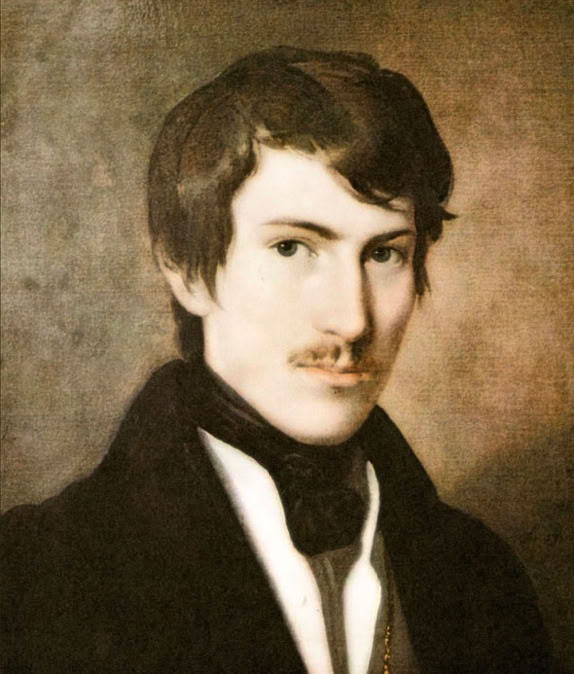
Nikolaus Lenau
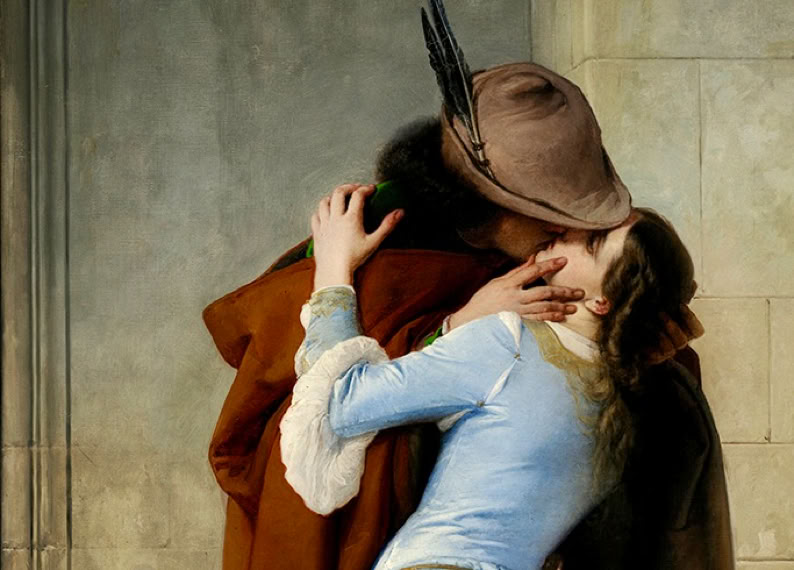
Love Theme 1
Love Theme 2

Throughout the work, Strauss demonstrates a dazzling command of the orchestra. The score calls for a huge ensemble — triple winds, four horns, three trumpets, three trombones, tuba, and a large string section — but every detail is vividly clear. The orchestration glitters: woodwinds sparkle with quicksilver agility, brass blaze with heroic splendor, and strings pour out both passion and tenderness. Don Juan became an early example of the “tone poem,” a single-movement orchestral work that tells a story or paints a scene through purely musical means — a form pioneered by Franz Liszt and perfected by Strauss.
Don Juan’s “Heroic” Theme
the second depicts his courteous and gentlemanly style (violins)...
Audio Player
Audio Player
Audio Player
Ah! – what should follow slips from my reflection;
Whatever follows ne’ertheless may be As à propos of hope or retrospection
As though the lurking thought had followed free;
All present Life is but an Interjection An “Oh!” or “Ah!” of Joy or Misery –
Or a “Ha! Ha!” – or “Bah!” – a Yawn – or “Pooh!” –
Of which perhaps the latter is most true.
—Nikoluas Lenau, from Don Juan (1823)
Yet the story of Don Juan does not end in triumph. After a final surge of reckless energy, the music suddenly falters. In the closing pages, Strauss turns from exuberance to despair. A weary oboe solo hints at disillusionment, followed by the faint echo of the opening theme — now hollow and drained of vitality. The Don, having found no perfect love, abandons his quest. A brief, chilling silence precedes the final, fatal chords as he welcomes death. In less than twenty minutes, Strauss traces the arc of an entire life — from blazing desire to existential emptiness. For audiences in 1889, this was more than just a vivid story: it was a revelation. Critics recognized Don Juan as the work of a new symphonic poet, a master capable of bending the orchestra to his imagination. Its combination of brilliant technique, emotional depth, and psychological realism became a hallmark of Strauss’s later tone poems — Till Eulenspiegel, Also Sprach Zarathustra, and Ein Heldenleben among them.
Today, Don Juan remains a thrilling showcase for any orchestra — a celebration of virtuosity and a portrait of youthful daring. But beneath the surface glitter lies something timeless and human: the longing for fulfillment, the beauty of desire, and the poignancy of its inevitable loss.
Enter Text